- Sound matters more than picture: record in a quiet room, close to the phone.
- Face a window, never put it behind you.
- Keep the phone steady, at eye level, with a clean lens.
- Pick the format before recording: 9:16, 1:1 or 16:9.
1. Sound first
Viewers forgive an average picture, not echoing sound. Pick the “softest” room you have: curtains, sofa, rug, a full wardrobe. Avoid tiled kitchens and bathrooms. Turn off fans and close the window if the street is noisy.
Stay within one metre (three feet) of the phone if you use its built-in mic. To go further, a small wired or wireless lavalier mic instantly improves your voice for a modest budget.
2. Light: face the window
The best light is free: a window in front of you, slightly to the side. Your face is softly lit and your eyes sparkle. Never sit with the window behind you: the phone exposes for the sky and your face goes dark.
- Record in the morning or late afternoon when the light is soft.
- In the evening, a lamp in front of you, behind the phone, does the job.
- Avoid ceiling light alone: it makes your eyes look hollow.
- Switch off lights of different colours to avoid an orange or blue skin tone.
3. A steady phone at eye level
A phone tripod, a stack of books or a shelf: it does not matter, as long as the picture does not move. Put the lens at eye level. Lower, people see you from below; higher, you look squashed.
Wipe the lens with a soft cloth before every shoot. One fingerprint is enough to make the whole picture blurry and milky.
4. Framing: the rule of thirds
Place your eyes on the imaginary line at the top third of the frame and leave a little space above your head. For vertical video, frame from the top of your head to your chest. In landscape, you can sit slightly to one side to leave room for a title in the edit.
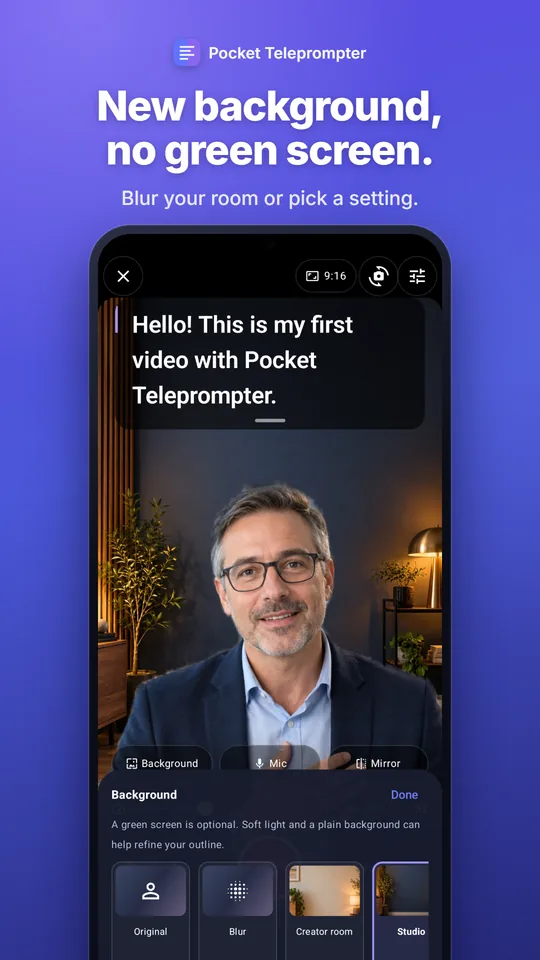
Check the background too: a tidy wall, a plant or a bookshelf beats an unmade bed. If the room is not presentable, blur it or replace it.
5. Choose the right format before recording
- 9:16 vertical: TikTok, Instagram Reels, YouTube Shorts, WhatsApp status.
- 1:1 square: some Facebook, Instagram and LinkedIn feeds.
- 16:9 landscape: YouTube, courses, presentations, video calls.
Cropping afterwards loses quality and often cuts off your head or hands. Decide the format before you press Record.
6. Front or back camera?
The back camera is almost always better quality, but you cannot see yourself. The front camera is more comfortable when you start. A good compromise: front camera for everyday videos, back camera for important ones, after checking the framing.
Checklist before you record
- Airplane mode or Do Not Disturb
So no call or notification interrupts the take.
- Battery and storage
At least 30% battery and a few gigabytes free.
- A 10-second test
Record one sentence, play it back with headphones: sound, light, framing.
- Your script ready
A short script shown close to the lens so you keep eye contact.
FAQ
How do I film myself with my phone?
Put the phone on a steady support at eye level, face a window, record in a quiet room within one metre and choose the format before you start. Do a 10-second test before the real take.
What lighting should I use to film at home?
Window light in front of you is the best and it is free. In the evening, a lamp placed behind the phone and facing you works well. Avoid having the window behind you.
How do I get good sound with a smartphone?
Record in a room with soft furnishings (curtains, sofa), stay close to the phone and cut background noise. A small lavalier mic makes a clear difference.
How can I read a script while filming myself?
Use a teleprompter on your phone: the text shows under the camera while you record. Pocket Teleprompter for Android does it for free and can even follow your voice.